

 USD
USD
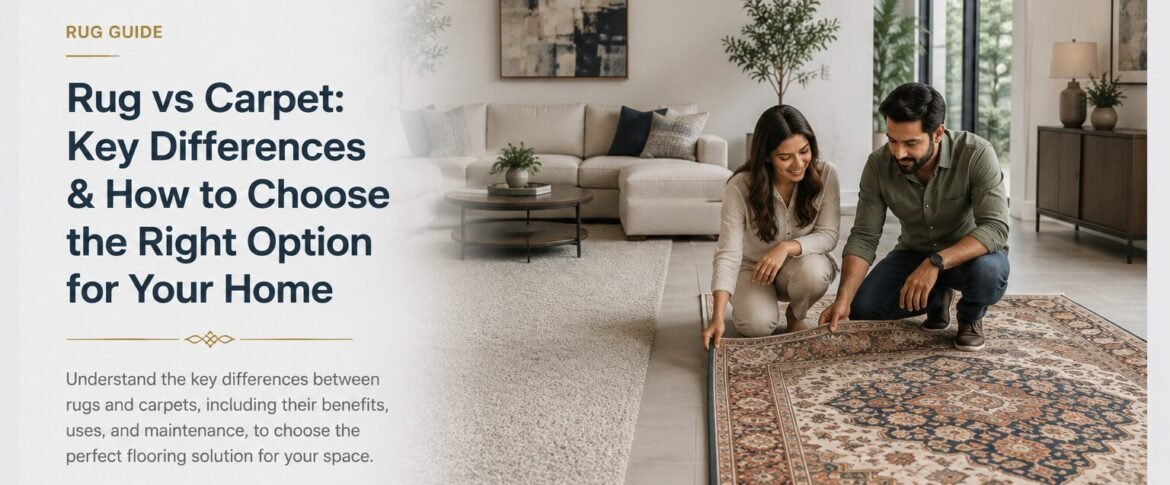
Rug vs Carpet: What’s the Difference?
It’s a really common mix-up: many of us homeowners, especially first-time buyers, tend to use the terms Rug vs Carpet interchangeably. And honestly, it’s easy to get confused! But here’s the thing – from an expert’s point of view in flooring and interior design, these two floor coverings are actually quite distinct. They serve different purposes, each bringing its own unique set of advantages and things to consider. Trust me, understanding these core distinctions is absolutely key to making the best decisions for your home’s style, comfort, and how well it truly functions for you.
In this definitive guide, I, Mohammad Taqib, am here to cut through all those common misconceptions and shine a light on the key differences between a rug and a carpet. Drawing from years of hands-on experience in the flooring industry, I’ll walk you through their definitions, compare their practical applications, and help you figure out which option truly suits your specific needs. What actually works best in various home settings often comes down to really understanding these foundational differences.
Understanding the Basics: What is a Rug and What is a Carpet? (Rug vs Carpet)
So, let’s break it down: a rug is usually a standalone, “loose-laid” piece of floor covering. It’s generally smaller than the room itself, meant to cover just a portion of the floor, and you can easily move it around. A carpet, on the other hand (what we often call wall-to-wall carpeting), is a permanent fixture. It’s installed across an entire room, affixed right to the subfloor.
The main differences really come down to size, how they’re installed, and how permanent they are. Think of a rug as a big, decorative mat. They come in all sorts of shapes and sizes – from small throw rugs to really big area rugs – and you can pick them up, spin them around, or even take them out completely. These pieces usually have nice finished edges and are laid over existing hard floors like hardwood, tile, or laminate. They’re fantastic for adding a decorative touch or for visually dividing different areas in a larger space. From my perspective, a rug truly offers a wonderful blend of art and practicality.
Defining a Rug
Simply put, a rug is a super versatile textile you use to cover a specific spot on your floor. It’s not permanently attached, so you can easily roll it up and move it whenever you want. Rugs come in a huge variety of materials, patterns, and sizes, making them perfect for instantly adding warmth, color, and texture to a room without making a big, permanent commitment.
- Easy to Move Around – Fantastic for cleaning, redecorating, or even taking with you if you move.
- Neatly Finished Edges – Typically has binding or fringes all around.
- Huge Material Choice – Think wool, cotton, silk, synthetics, jute, sisal, and so many more!
- Many Purposes – Great for decoration, comfort, soaking up sound, protecting your existing floors, or marking out specific zones.
Defining a Carpet
A carpet, in its classic sense, means wall-to-wall floor covering that’s permanently put in place over your subfloor, usually with soft padding underneath. It covers every inch of the room’s floor, giving you one continuous, unified surface. The installation process typically involves stretching the carpet tight and securing it with tack strips along the edges, ensuring a smooth, perfectly fitted look.
- Permanent Fixture – Stretched and securely attached to the floor, not meant to be moved easily.
- Covers the Whole Room – Goes from wall to wall, creating one seamless surface.
- Often Padded – Usually installed with padding for extra comfort, insulation, and to make it last longer.
- Main Purposes – Provides whole-room warmth, absorbs sound, gives a unified look, and offers a soft cushion.
Key Differences: Rug vs Carpet Installation, Size, and Functionality
The biggest distinction between a rug and a carpet really comes down to how they’re installed and what they cover. This, in turn, completely changes their impact on a room’s design, how you maintain them, and the overall feel of your space. While both definitely add warmth and soften footsteps, their fundamental characteristics create wildly different experiences for homeowners.
From my experience, one of the most common mistakes homeowners make is totally underestimating how these differences play out in daily life. What actually works for a bustling family room might be a world away from what you need in a serene master bedroom, and your choice between a rug and carpet is absolutely central to that functionality.
Installation and Permanence
Perhaps the most significant difference is how they go in and how long they’re meant to stay. A rug is a standalone item; you simply lay it on top of your existing floor. This makes it incredibly flexible! Carpeting, though, is a semi-permanent fixture, needing professional installation to be stretched and secured across the entire floor area. Taking out wall-to-wall carpet is a pretty big job, unlike just rolling up a rug.
Size and Coverage
Rugs are designed to cover only a portion of the floor. They’re great for defining specific areas or adding visual pop without hiding your entire underlying floor. They come in standard sizes or can even be custom-made. Carpeting, on the other hand, is cut to perfectly fit the exact dimensions of a room, giving you complete wall-to-wall coverage, which creates a more uniform and expansive look.
Cost Considerations
Initially, a really good quality area rug can sometimes feel more expensive per square foot than basic wall-to-wall carpet material. However, when you factor in the professional installation costs for wall-to-wall carpet – which can be quite hefty – a rug often turns out to be a lower overall investment for smaller areas. Plus, if something gets damaged, replacing just one rug is usually far less costly and disruptive than replacing an entire carpeted room.
Maintenance and Cleaning
When it comes to keeping things clean, there’s a clear difference. Small to medium-sized rugs can often be shaken out, vacuumed, or even sent off for professional cleaning, making deep cleaning much easier. Some smaller ones can even go right into your washing machine! Carpeting requires regular on-site vacuuming and professional steam cleaning for those deeper dirt and stubborn stains. A common mistake I’ve seen is putting off professional carpet cleaning, which can seriously cut its lifespan short and even impact the air quality in your home.
Sound Absorption and Insulation
Both rugs and carpets definitely help soak up sound and add insulation, making rooms feel quieter and warmer. However, wall-to-wall carpeting, especially with a good quality underpad, offers far superior benefits in both areas because it covers so much more space. In practice, I’ve noticed carpets drastically reduce echo in large, open-plan homes, while rugs provide localized sound dampening and a touch of warmth in specific zones.
Design Flexibility and Aesthetic Impact
Rugs truly shine when it comes to design flexibility. They’re like movable pieces of art, letting homeowners easily switch up a room’s look seasonally or as their tastes evolve. They can perfectly define conversational areas, add vibrant splashes of color, or introduce intricate patterns. Carpeting, by contrast, creates a unified foundation for the room. While it certainly adds texture and color, its fixed nature means it’s not as easy to adapt your design on a whim. Its aesthetic impact is more about consistency and warmth rather than dynamic focal points.
Advantages and Disadvantages of Choosing a Rug
Rugs offer unmatched flexibility in how you design your space and can really define an area without a permanent commitment, making them a super popular choice for homeowners who love versatility. However, all that flexibility also comes with a few trade-offs that are really important to consider.
From my experience, a rug’s adaptability is its greatest superpower, but understanding its limits is just as vital for smart home design. Pick the right rug, and it can truly elevate a room; pick the wrong one, and it might just feel out of place or simply not practical.
Pros of Rugs
- Design Versatility: A rug can instantly transform the vibe of a room. You can effortlessly swap them out to refresh your decor, introduce new colors, or even match seasonal themes without a major renovation.
- Totally Portable: When you pack up and move homes, your beloved rugs can come right along with you! This makes them a fantastic long-term investment that isn’t tied to just one property.
- Protects Existing Floors: Laying a rug over your beautiful hardwood, laminate, or tile can act as a shield, protecting these surfaces from scratches, wear, and tear, especially in those busy, high-traffic spots.
- Defines Spaces with Ease: In open-concept living areas, an area rug is an absolute genius tool for visually separating different functional zones, like creating a cozy seating arrangement or marking out your dining area.
- Easier to Clean (especially smaller ones): Smaller rugs are a breeze! You can take them outside for a good shake or hang them up for a more thorough clean. Some little rugs are even machine washable. Plus, spot cleaning is contained to just one area.
- Budget-Friendly for Specific Areas: If you just want to add warmth and comfort to a small part of a room, a rug is often much kinder to your wallet than going all-in with wall-to-wall carpet.
- Helps Dampen Sound: While it won’t be as comprehensive as wall-to-wall, a rug still does a great job of absorbing ambient noise, cutting down on echoes, and making a room feel noticeably cozier.
Cons of Rugs
- Can Be Slippery: Without a proper rug pad underneath, rugs can easily slide around on hard surfaces, creating a tripping hazard. Forgetting the rug pad is a really common oversight!
- Less Comprehensive Coverage: They don’t give you full room insulation or total sound absorption, meaning those exposed hard floor areas can still feel cold or sound noisy.
- Potential Trip Hazard: The edges of rugs can sometimes curl up or lift, especially in busy pathways, if they’re not properly secured or if you’ve chosen the wrong type for that spot.
- Uneven Wear: If you don’t periodically rotate your rug, the areas that get the most foot traffic can start to show wear and tear much faster than the rest.
- Needs the Right Size: Picking a rug that’s the wrong size can make a room feel totally out of proportion or just unfinished. An undersized rug is a frequent design mistake I see.
Exploring the Benefits and Drawbacks of Wall-to-Wall Carpeting
Wall-to-wall carpeting gives you a seamless, consistent floor covering that offers fantastic insulation and sound dampening, creating a beautifully unified and comfortable vibe throughout an entire room. But its permanent nature brings both distinct advantages and a few specific challenges that homeowners should really know about.
As Mohammad Taqib, I can certainly tell you that while carpeting delivers an undeniable sense of plush comfort and quiet, its installation and maintenance needs are a whole different ballgame compared to a flexible rug. Knowing these factors upfront is absolutely key to being happy with your choice in the long run.
Pros of Carpets
- Superior Insulation: Carpeting, especially when paired with quality underpadding, is an amazing insulator. It really helps keep heat in during colder months, potentially even lowering your energy bills.
- Exceptional Sound Absorption: It drastically cuts down on ambient noise and echoes, making rooms much quieter and more peaceful – perfect for bedrooms, home offices, and media rooms.
- Enhanced Safety: The soft surface of carpet provides a wonderful cushion against falls, making it a much safer option for homes with little ones or elderly family members.
- Unified Aesthetic: Wall-to-wall carpet creates one continuous, unbroken surface that can make a room feel bigger and more cohesive, giving your space a strong, foundational aesthetic.
- Comfort Underfoot: The soft, plush feel of carpet is just unbeatable, offering a luxurious and warm surface for bare feet, especially in those private, cozy spaces.
- Hides Imperfections: Carpet can do a great job of concealing minor flaws or uneven spots in your subfloor.
Cons of Carpets
- Permanent Installation: Once it’s in, carpet is a serious long-term commitment. Changing it means a lot of effort and expense, unlike simply swapping out a rug.
- Tougher on Deep Stains: While daily vacuuming is easy, really deep stains can be a challenge to get out of wall-to-wall carpeting and often call for professional cleaning services.
- Can Trap Allergens: Carpet fibers can unfortunately trap dust, pet dander, and other allergens. This could potentially affect indoor air quality for allergy sufferers if it’s not cleaned regularly and thoroughly.
- More Challenging Installation/Removal: You usually need professional installation, which adds to the initial cost. And taking it out is also labor-intensive and often quite messy.
- Shows Wear in High-Traffic Areas: Over time, those well-trodden paths can get matted down or worn out, especially in very busy zones, changing the carpet’s overall look.
- Limited Design Flexibility: Once it’s installed, the color and pattern are set for the entire room, offering much less immediate adaptability than a rug.
When to Choose a Rug or a Carpet: Optimal Use Cases
Deciding between a rug and carpet really boils down to the specific room you’re thinking about, the look you’re going for, and practical stuff like how much foot traffic it gets, the climate you live in, and your lifestyle. There isn’t one “better” option universally; instead, it’s all about perfectly matching the floor covering to its ideal use.
From years of guiding homeowners, I can confidently say that truly understanding the environment and the purpose of a space is your secret weapon to making the right choice. Sometimes, the smartest solution even involves a clever combination of both!
For High-Traffic Areas
In spots like hallways, entryways, or family rooms that see constant foot traffic, durability is absolutely key. Wall-to-wall carpet, especially varieties made from resilient synthetic fibers, can offer a unified, safe, and relatively easy-to-maintain surface. If you have hard flooring in these busy zones, a tough, low-pile rug with a super strong non-slip pad is your best bet. Consider materials like polypropylene or nylon for their easy cleaning and resilience.
For Design Flexibility and Layering
If you’re someone who just *loves* to redecorate or wants the freedom to easily update your space, rugs are hands-down the winner. They’re fantastic for bringing in color, pattern, and texture without any long-term commitment. You can layer a rug over existing hard floors or even over a low-pile carpet to define zones or add extra warmth and visual punch. From my observations, the most effective way to blend warmth and design flexibility in a living room is often a high-quality area rug placed over a neutral, low-pile wall-to-wall carpet – truly giving you the best of both worlds.
For Noise Reduction and Warmth
When your main goal is maximum sound absorption and comprehensive warmth, especially in bedrooms, home theaters, or kids’ playrooms, wall-to-wall carpeting is the superior choice. Its full coverage and integrated padding create a sound-deadening and insulating barrier that a standalone rug simply can’t replicate across an entire space. Mohammad Taqib often recommends plush carpeting for master suites to truly create that serene and wonderfully cozy retreat.
For Allergy Sufferers and Easy Cleaning
For anyone dealing with allergies, hard flooring paired with washable rugs is often a recommended combo. Allergens can be easily vacuumed or mopped away from the hard surface, and those rugs can be regularly cleaned or even tossed in the laundry. While carpets can trap allergens, newer low-pile carpets and consistent, professional cleaning can definitely help mitigate this. A common misconception is that all carpets are bad for allergies; often, it’s the lack of proper cleaning, not the carpet itself, that makes things worse.
Real-World Scenarios
- Living Room: For a busy family living room, a sturdy synthetic rug over hardwood offers easy cleaning, clearly defines the seating area, and can be swapped out. Alternatively, a plush carpet provides full comfort and quiet.
- Bedroom: A deep-pile, soft carpet is often the go-to for bedrooms, providing luxurious warmth and excellent sound insulation for a truly restful environment. A smaller, decorative rug might go right next to the bed for that extra touch of softness.
- Dining Room: A large, flat-weave rug is an excellent choice under a dining table. It protects your floor from spills and chair scuffs while being relatively simple to keep clean. Wall-to-wall carpet here is just impractical with frequent spills.
- Hallways & Stairs: For both safety and sound dampening, a durable, low-pile carpet is often chosen for stairs and long hallways. Rug runners are also an option, but they definitely need diligent securing to stay in place.
Conclusion
Ultimately, the big decision between a rug and a carpet really comes down to truly understanding your specific needs, the character of the room, and your own personal style preferences. A rug gives you unmatched flexibility, design versatility, and portability, making it ideal for marking out spaces and adding changeable flair. On the flip side, wall-to-wall carpet delivers comprehensive warmth, superior sound absorption, and a unified, seamless foundation that boosts comfort and insulation throughout an entire room. As Mohammad Taqib always emphasizes, taking the time to weigh factors like permanence, maintenance, and the atmosphere you want to create will absolutely guide you to the perfect flooring solution for your home.
Before you make your final choice, really think about your lifestyle, your budget, and your long-term vision for your home. And please, don’t hesitate to chat with flooring professionals! They can offer tailored advice based on your unique circumstances and help you explore the incredible array of options available in both rugs and carpets. Remember, your floor is the very foundation of your home’s comfort and style, so choose wisely!
Frequently Asked Questions
What’s the main difference between a rug and a carpet?
The biggest difference is that a rug is a loose, portable floor covering that usually only covers a portion of a room. A carpet (the wall-to-wall kind), however, is a permanent floor covering that’s stretched and secured across an entire room. This distinction really impacts how they’re installed, how much design flexibility you have, and how much of the room they cover.
Is a rug more expensive than wall-to-wall carpet?
Per square foot, a really high-quality rug can sometimes be more expensive than basic carpet material. But, once you factor in the professional installation costs for wall-to-wall carpet, a rug often ends up being more budget-friendly if you’re just covering specific areas. Plus, replacing a single rug is generally much less costly than replacing an entire carpeted room.
Can you put a rug on carpet?
Absolutely, yes, you can put a rug on carpet! This layering technique is fantastic for adding visual interest, defining different zones, or even protecting high-traffic spots on your existing carpet. To make sure it doesn’t slip or bunch up, it’s super important to use a specialized rug pad designed specifically for carpet-on-carpet applications.
Which is better for soundproofing: a rug or carpet?
Wall-to-wall carpet, especially when installed with a good quality underpad, is significantly better for both soundproofing and overall sound absorption than a standalone rug. Because it covers the entire floor, it creates a much more comprehensive barrier against noise and dramatically reduces echoes in a room.
How often should I clean my rug versus wall-to-wall carpet?
For rugs, I’d recommend vacuuming weekly, and getting them professionally cleaned every 1-2 years – or even more often if they’re in a high-traffic area or you have pets. Wall-to-wall carpet should also be vacuumed weekly and professionally deep-cleaned every 12-18 months. This really helps maintain its appearance, extend its life, and ensure good indoor air quality.

Looking for the Perfect Rug?
Get a free consultation with our rug experts. We help you choose, style, and maintain the perfect rug for your space — at no cost.
