

 USD
USD
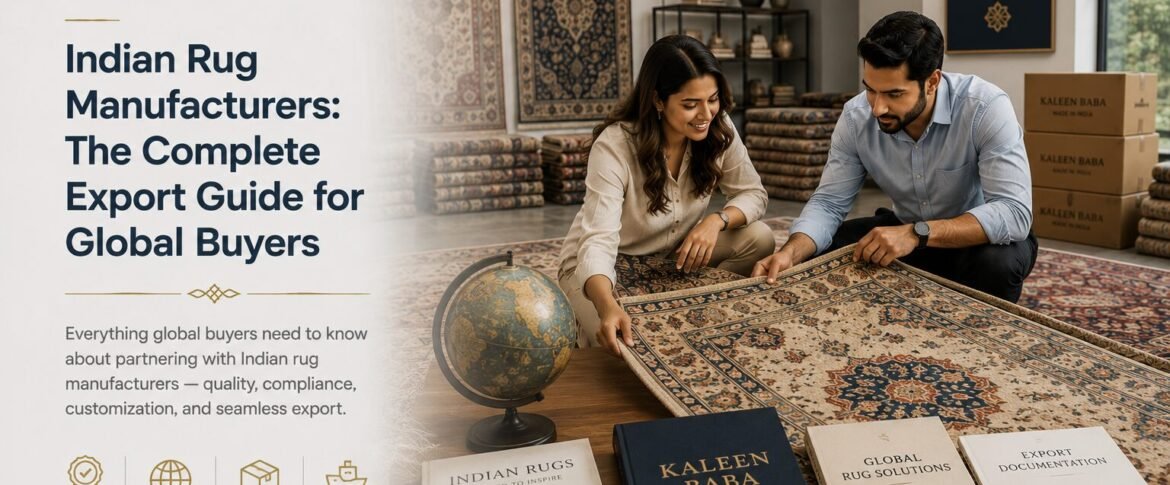
Indian Rug Manufacturers: Your B2B Export & Sourcing Guide
India isn’t just a place; it’s a global powerhouse when it comes to rugs, famous for its stunning craftsmanship, incredible variety of materials, and prices that make sense. For B2B buyers worldwide, teaming up with Indian rug manufacturers throws open the doors to a vast array of high-quality products, from hand-knotted masterpieces to durable machine-tufted carpets. Having spent years deeply involved in this world, I’ve personally witnessed the magic and the massive potential that comes with sourcing from India. That’s why I’ve put together this detailed guide, born from years of hands-on experience. My goal? To simplify the export journey, helping wholesale buyers confidently navigate the trickier bits and build strong, lasting partnerships with top Indian rug manufacturers.
Introduction: Exporting Rugs from India
For any B2B buyer chasing quality, variety, and real value, exporting rugs from India isn’t just a smart move – it’s a game-changer. This industry is woven with rich history, brought to life by incredibly skilled artisans, and supported by a solid manufacturing backbone. It can handle everything from breathtaking traditional patterns to the latest, most innovative contemporary styles. To kick off a successful sourcing adventure, your very first step is really getting to know the world of Indian rug manufacturers.
Here’s what I’ve learned truly works: nail down exactly what your market needs. Are they after natural fibers, specific sizes, or unique weaving styles? Trust me, a solid partnership with a dependable rug manufacturer in India thrives on clear, open communication about what they can produce and how they operate ethically.
Key Export Destinations for Indian Rug Manufacturers
The global market is a huge tapestry of opportunities for Indian rug manufacturers, with each destination having its own unique tastes and demands. Pinpointing the perfect markets for your export strategy can truly make or break your success. So, let’s dive into some of the top spots where Indian rugs really shine.
USA: A Major Market for Indian Carpets
The United States? Still absolutely the biggest player when it comes to importing rugs from India. American B2B buyers often look for a fantastic mix: everything from classic hand-knotted beauties to modern designs and tough, machine-made carpets. There’s also a huge appetite for eco-conscious choices and particular material blends, so it’s essential for carpet rug manufacturers to have a really diverse product lineup.
- Market Trends: Right now, think Boho-chic, Scandinavian simplicity, and anything made from sustainable materials – those are big hits. Lots of importers are actively seeking ethically sourced and certified products.
- Logistical Considerations: Ocean freight is the go-to for efficient shipping, but it means you’ll need smart planning, especially around busy seasons and those all-important customs clearances.
Qatar: Luxury and Traditional Appeal
Qatar, much like the rest of the Middle East, has a serious soft spot for luxury, incredibly intricate designs, and top-tier craftsmanship in its rugs. Here, buyers are often on the hunt for lavish Persian-inspired patterns, deep, rich color schemes, and custom-made designs that perfectly capture local tastes. That’s why the top rug manufacturers serving Qatar often shine with their exclusive, custom-made creations.
- Buyer Preferences: It’s all about silk, fine wool, and exquisitely detailed hand-knotted pieces. Being able to customize size and design? That’s hugely appreciated here.
- Export Dynamics: Air freight is often chosen for high-value or urgent orders, though sea cargo takes care of the bigger shipments.
Europe: Diversity in Design and Sustainability Focus
Europe is a wonderfully varied market; practically every country has its own distinct preferences. So, whether it’s the sleek minimalist styles loved in Scandinavia or the timeless elegance favored in Western Europe, Indian rug manufacturers really need to offer a broad palette. And let’s not forget: sustainability and ethical production are becoming non-negotiables for European B2B buyers. These buyers are actively seeking partners among carpet manufacturing companies that genuinely show a dedication to protecting both the environment and their people.
- Key Markets: Germany, the UK, France, and the Nordic nations are big importers, and each comes with its own specific expectations for design and quality.
- Regulatory Compliance: When it comes to EU regulations – materials, chemicals (REACH), and labor practices – strict adherence isn’t just important, it’s absolutely essential.
Export Documentation and Compliance for Indian Rug Manufacturers
Steering through the intricate world of international trade demands super careful attention to all your paperwork and compliance. If you’re a B2B buyer sourcing from Indian rug manufacturers, getting a grip on these requirements is absolutely crucial for seamless transactions and avoiding frustrating delays. So, what exactly are the must-have export documents that Indian rug manufacturers need to supply?
In my experience, the core documents you’ll always need are the Commercial Invoice, Packing List, either a Bill of Lading (for ocean shipments) or an Airway Bill (for air cargo), a Certificate of Origin, and sometimes a Quality Inspection Certificate. A super common pitfall? Forgetting about those country-specific import regulations – they can be wildly different from one place to another.
Key Documents for Seamless Rug Exports
As someone who’s been there, done that in exporting, I can tell you firsthand: having all your paperwork sorted from day one saves a colossal amount of time and prevents those nightmare customs headaches. Here’s a quick rundown of the absolutely crucial documents:
- Commercial Invoice: This spells out everything about the goods – quantities, prices, payment terms, and who’s involved. It’s totally critical for customs to figure out the value.
- Packing List: This is your detailed inventory for each package: dimensions, weight, and exactly what’s inside. Absolutely essential for both freight and customs checks.
- Bill of Lading (B/L) / Airway Bill (AWB): Think of this as your shipping contract, a receipt for the goods, and for sea freight (B/L), it even acts as a document of title. It clearly lays out who owns what and how it’s being transported.
- Certificate of Origin (COO): This little gem confirms your rugs genuinely came from India, which can be a huge deal for snagging preferential tariff rates. Usually, your local Chamber of Commerce issues it.
- Quality Inspection Certificate: This one proves your rugs hit those agreed-upon quality marks. While it’s not always a must-have, it’s fantastic for building buyer trust and cutting down risks.
- Fumigation Certificate: If you’re using wooden packaging like pallets, the importing country might insist on a fumigation certificate to keep unwanted pests out.
Understanding HS Codes and Regulatory Compliance
Getting your rugs correctly categorized with Harmonized System (HS) codes is absolutely critical for figuring out the right duties and tariffs. It’s a global language for identifying products, making things consistent worldwide. Beyond that, sticking to the importing country’s specific environmental, labor, and safety standards isn’t just good practice – it’s a non-negotiable for any serious, reputable rug manufacturer.
Here’s what I’ve seen work time and again: team up with carpet manufacturing companies that either have a dedicated export team or partner with seasoned freight forwarders who truly get these intricate details. That way, you minimize mistakes and ensure every single local and international regulation is ticked off.
Duties, Tariffs, and Shipping Options for Indian Rug Exports
When you’re a B2B buyer, those duties, tariffs, and shipping costs aren’t just minor footnotes – they’re major financial players you need to factor in. So, how exactly do duties and tariffs shape your sourcing strategy with Indian rug manufacturers, and what are your smartest shipping choices?
Basically, duties and tariffs are taxes your destination country slaps on imports, and they can seriously inflate the final price of your goods. These aren’t fixed; they’ll change based on the product (that HS code again!), where it’s coming from, and where it’s going. For efficient shipping, you’re usually looking at sea freight for big, budget-friendly orders, or air freight if you need speed for high-value but smaller shipments.
Navigating Import Duties and Tariffs
Really grasping your country’s tariff system for Indian imports is absolutely vital for nailing down accurate cost estimates. Keep an eye out for Free Trade Agreements (FTAs) or Generalized System of Preferences (GSP) schemes; these can drastically cut or even eliminate duties, making that Certificate of Origin a true goldmine. My advice? Always chat with your customs broker to get those duty calculations spot on.
“In my experience, a slight discrepancy in the HS code can lead to entirely different duty rates. Double-checking with both the manufacturer and your customs broker is a non-negotiable step for any serious B2B buyer.”
Incoterms: Defining Responsibilities and Costs
Incoterms – those all-important International Commercial Terms from the ICC – are the rulebook that clearly spells out who’s responsible for what when goods are delivered under a sales contract. And take it from me, misinterpreting these can be a huge source of headaches and disputes.
- EXW (Ex Works): The buyer takes on all costs and risks right from the manufacturer’s factory gate.
- FOB (Free On Board): The seller gets the goods onto the ship the buyer chooses at the agreed-upon port. Risk shifts once those goods are safely on board.
- CIF (Cost, Insurance, and Freight): Here, the seller handles the cost, insurance, and freight all the way to the destination port. But remember, the risk still transfers as soon as the goods are on the ship.
- DDP (Delivered Duty Paid): This is the seller taking on the most responsibility – they deliver the goods right to your doorstep, covering all costs, including duties and taxes in your country.
Shipping Methods for Indian Rugs
Your shipping choice boils down to how fast you need it, how much you’re sending, and what your budget looks like. Each comes with its own set of pros and cons:
- Sea Freight: Perfect for massive orders when keeping costs down trumps speed. You can opt for a Full Container Load (FCL) or a Less than Container Load (LCL). This is definitely the go-to method for most wholesale rug suppliers India.
- Air Freight: Your best bet for urgent deliveries, super valuable items, or smaller shipments where getting it fast is everything. It’s quicker, yes, but also much pricier.
- Multimodal Transport: This mixes things up – like road-sea-road – to get the best balance of cost and delivery time, especially useful for places not right on the coast.
Teaming up with a freight forwarder who has solid connections in both India and your home country is absolutely vital. They’ll be your wizards for customs, consolidating shipments, and tackling all the tricky bits of international logistics, making sure your rugs land safely and smoothly.
How Kaleen Baba Handles Global Exports: A Practical Example for B2B Sourcing
To really bring these best practices to life for B2B buyers, let’s look at a real-world example. Take Kaleen Baba, a major player among Indian rug manufacturers – they perfectly show how seasoned companies navigate the complexities of global exports. Their way of doing things offers some seriously valuable insights for any B2B buyer hoping to smooth out their sourcing journey.
Quality Assurance and Ethical Sourcing
At the heart of Kaleen Baba’s strategy is an unwavering commitment to quality assurance, right from choosing the yarn to that very last inspection. This means countless checkpoints: scrutinizing raw materials, ongoing quality checks throughout weaving and finishing, and a thorough final audit before anything even ships out. What I’ve seen truly work for maintaining consistent quality in handcrafted items, even beyond standard certifications, is nurturing long-standing relationships with artisan communities and actively investing in their skills. This isn’t just about business; it ensures that the incredible generational expertise is preserved and beautifully woven into every single rug.
What’s more, their rock-solid commitment to ethical sourcing – fair wages, safe workplaces, and absolutely no child labor – really speaks to responsible B2B buyers, especially in markets like Europe and the USA. This kind of transparency builds enormous trust and truly cements their standing as a highly reputable rug manufacturer.
Customization and Production Scalability
For B2B buyers, being able to tailor orders and ramp up production? That’s absolutely vital. Kaleen Baba, much like other top rug manufacturers, truly shines when it comes to custom design services, empowering buyers to turn their unique visions into reality. Whether it’s particular color schemes, material mixes, or bespoke sizes and patterns, this kind of flexibility is a massive plus. They masterfully balance the artisanal heart of rug making with smart, modern production management, efficiently handling everything from small, specialized orders to huge wholesale demands.
One frequent misstep is simply not realizing how long custom, hand-knotted orders actually take. In my experience, crystal-clear communication about production timelines and building in some buffer time is absolutely essential for hitting those delivery expectations.
Streamlined Logistics and Documentation
Handling exports to all corners of the globe demands a super slick logistics system. Kaleen Baba, just like other seasoned carpet manufacturing companies, has built strong, reliable connections with international freight forwarders. They make sure every piece of export paperwork is prepared with absolute precision – from nailing the HS code classification to getting all the vital certifications – which keeps those annoying customs delays to a minimum. Their deep knowledge of various Incoterms means they can offer really flexible shipping options, perfectly suited to the unique needs of different B2B buyers, be it FOB, CIF, or DDP.
This all-encompassing approach, which beautifully marries traditional artisanal skill with modern export efficiency, is precisely why companies like Kaleen Baba truly shine among Indian rug manufacturers. It really offers a clear roadmap for successful B2B collaborations.
Conclusion
Teaming up with Indian rug manufacturers isn’t just an option; it’s an incredible opportunity for B2B buyers to bring stunningly high-quality, diverse, and ethically made rugs to global markets. Your success really depends on truly understanding each market’s quirks, paying obsessive attention to all your export paperwork and regulations, and smartly navigating duties, tariffs, and shipping complexities. When buyers focus on transparency, rock-solid quality, and ethical sourcing, they can build lasting and highly profitable relationships with India’s top carpet manufacturing companies. This comprehensive guide highlights one truth above all: a well-informed strategy, powered by expert insights, is your ultimate key to unlocking the full, vibrant potential of India’s rug export industry.
Thinking about custom rug solutions or making your current supply chain run smoother? Reach out to trusted Indian rug manufacturers today to chat about your specific wholesale needs and find that perfect handcrafted piece to elevate your collection.
Frequently Asked Questions
What are the primary considerations when selecting Indian rug manufacturers for B2B export?
When you’re choosing Indian rug manufacturers, B2B buyers should really focus on a few key things: do they have solid export experience? Do they actually stick to quality standards? Can they handle your bulk orders? And are they genuinely committed to ethical sourcing? Always double-check their certifications, see how quickly they respond, and ask about their ability to customize. For extra peace of mind, a site visit or a third-party audit can really confirm their operations are up to scratch.
How can a rug manufacturer ensure consistent quality for international orders?
Keeping quality consistent for international orders comes down to a robust, multi-stage quality control process – right from inspecting the raw materials all the way to final packaging. Top-notch rug manufacturers put strict checks in place at every single production stage, invest in training their skilled artisans, and often get international quality certifications. Plus, super clear communication with the buyer about specifications really helps avoid any mix-ups.
What role do carpet manufacturing companies play in sustainable sourcing?
Carpet manufacturing companies are absolute key players in sustainable sourcing. They do this by choosing eco-friendly materials, cutting down waste, and using responsible dyeing methods. They also champion fair labor, support local communities, and maintain transparent supply chains. You’ll find many leading manufacturers getting certifications like GoodWeave or OEKO-TEX to prove their dedication to being environmentally and socially responsible.
What are the common payment terms offered by top rug manufacturers in India?
Usually, top Indian rug manufacturers ask for a percentage upfront as a deposit (say, 30-50%) to kick off production. The rest is typically due when the goods ship or when documents are presented. For bigger deals, a Letter of Credit (LC) is often the preferred choice, as it helps both sides manage risk. And, naturally, building a solid relationship through regular orders can open doors to more flexible payment arrangements down the line.
How can B2B buyers effectively negotiate custom carpet manufacturing for wholesale orders?
To really nail negotiations for custom carpet manufacturing, B2B buyers need to come prepared with super clear, detailed specs: materials, dimensions, design files, and exact quantities. It’s also vital to understand what the manufacturer can truly do and their typical timelines. Try to focus on the long-term partnership value, not just the immediate price tag. Be ready to talk about costs for sample production and minimum order quantities. Ultimately, open and honest communication lays the strongest groundwork for any negotiation.

Looking for the Perfect Rug?
Get a free consultation with our rug experts. We help you choose, style, and maintain the perfect rug for your space — at no cost.
