
 USD
USD
How Wool Carpet Manufacturers Ensure Quality Output
If you’re a business on the hunt for flooring that’s not just durable and stunning but also sustainable, you know how incredibly important the manufacturing process is. As someone who lives and breathes textiles and flooring, I’ve seen firsthand that creating a wool carpet, from raw fiber to the final product, is a truly intricate dance. It demands super close attention at every single step. This article dives deep into the rigorous processes and unwavering commitment that define leading wool carpet manufacturers, showing you how they consistently deliver outstanding quality for even the most discerning B2B clients.
How Do Wool Carpet Manufacturers Select Premium Raw Wool?
Wool carpet manufacturers select premium raw wool by evaluating crucial metrics such as fiber micron count, staple length, crimp, and color purity, often sourcing from specific sheep breeds and geographical regions renowned for their quality. This meticulous initial selection is fundamental to the durability and aesthetic appeal of the final product.
The foundation of any high-quality wool carpet begins long before the first fiber ever hits the loom. In practice, the initial step involves rigorous sourcing and grading of raw wool. Experienced buyers for wool carpet manufacturers often travel globally, forging relationships with trusted wool brokers and sheep stations in regions like New Zealand, the UK, and Australia, all known for producing superior wool fibers.
Key Criteria for Raw Wool Selection
What actually works is a multi-point assessment designed to predict the wool’s performance under manufacturing stress and its long-term resilience as a finished carpet. From experience, overlooking any of these aspects can compromise the entire batch.
- Micron Count: This measures the wool fiber’s diameter. A lower micron count means finer wool, which is softer but might be less resilient for heavy-traffic carpets. Wool carpet manufacturers typically target specific micron ranges (e.g., 28-35 microns for carpet wool) to strike a balance between softness and robust durability.
- Staple Length: This is the average length of the wool fibers. Longer staples lead to stronger, more uniform yarns, which means less shedding and enhanced longevity.
- Crimp: That natural waviness of the wool fiber. High crimp adds resilience, elasticity, and bulk, helping the yarn hold its shape better and resist crushing.
- Color Purity: Raw wool should ideally be free from natural pigmentation or discoloration, as this ensures consistent dyeing and vibrant color outcomes. Impurities often require more extensive bleaching, which can weaken fibers.
- Cleanliness: The wool simply must be largely free of vegetable matter (VM) and other contaminants. Too much VM leads to more processing and potential weak points in the yarn.
A common mistake is prioritizing cost over these critical quality indicators. While cheaper wool might reduce upfront expenses, it inevitably leads to higher production waste, inconsistent quality, and ultimately, a less durable and aesthetically pleasing carpet, eroding brand reputation for high end wool carpet brands.
Precision in Production: Dyeing and Spinning Standards for Wool Carpet Manufacturers
Dyeing and spinning standards are paramount for wool carpet manufacturers, as they directly impact yarn strength, color consistency, and overall carpet longevity. Precision control over these processes ensures uniform color penetration and creates robust yarns capable of withstanding significant wear.
Once the raw wool has been meticulously selected, it undergoes transformation through dyeing and spinning—processes where precision is non-negotiable. These stages are critical for determining the carpet’s ultimate texture, strength, and color fidelity.
The Art and Science of Dyeing
Dyeing wool for carpets isn’t merely about applying color; it’s about achieving deep, even penetration and colorfastness. Leading wool carpet manufacturers employ advanced dyeing techniques:
- Skein Dyeing: This method dyes the yarn in skeins (large loops) before weaving. It’s highly effective for achieving rich, custom colors and is often favored by wool rug manufacturers for bespoke designs.
- Hank Dyeing: Quite similar to skein dyeing, where yarn hanks are submerged in dye baths, ensuring thorough color saturation. This method offers excellent control over color matching and is used for specific broadloom and rug productions.
- Space Dyeing: A clever technique where different colors are applied along the length of a single yarn, creating multi-tonal, variegated effects within the carpet.
Colorfastness testing is routinely performed to ensure the dyed yarn resists fading from light exposure, rubbing, and cleaning. This is particularly important for commercial installations where carpets face constant use and cleaning cycles. Expert “dye masters” with decades of experience are indispensable here, combining chemical knowledge with an artisan’s eye for color.
Spinning for Strength and Uniformity
The spinning process converts raw wool fibers into durable yarn. The choice of spinning method significantly influences the carpet’s performance:
- Woolen Spinning: This produces a bulkier, softer yarn with a more varied fiber alignment. This yarn is ideal for textured carpets where a cozy, less formal look is desired.
- Worsted Spinning: Creates a smoother, stronger, and more uniform yarn by aligning the fibers parallel. This results in crisper patterns and superior durability, often preferred for high-end, intricately patterned carpets or those destined for heavy commercial traffic. Many best wool carpet manufacturers utilize worsted yarns for premium ranges.
- Semi-Worsted Spinning: Think of this as a clever hybrid approach, balancing the characteristics of woolen and worsted yarns, offering a good compromise between bulk and strength.
Throughout these processes, advanced machinery combined with human oversight ensures consistency in yarn thickness, twist, and strength. The yarn’s tensile strength is tested regularly to guarantee it can withstand the rigors of weaving and subsequent use.
From Loom to Luxury: Weaving and Finishing Standards Maintained by Best Wool Carpet Manufacturers
The best wool carpet manufacturers uphold stringent weaving and finishing standards that dictate a carpet’s structural integrity, pattern clarity, and tactile quality. Methods like Axminster and Wilton weaving, combined with precise post-production finishing, are key to creating enduring and visually appealing wool carpets.
With high-quality yarn ready, the next phase sees the yarn transformed into a carpet through weaving or tufting. This stage is where the carpet’s structure, pattern, and initial tactile properties are solidified. Wool broadloom carpet manufacturers utilize distinct methods, each with its own advantages for specific applications.
Advanced Weaving Techniques
The choice of weaving technique is a crucial decision, influencing the carpet’s aesthetics, durability, and cost. From an industry perspective, several key methods stand out:
- Axminster Weaving:
- Process: Individual pile yarns are inserted and cut, creating a clear, crisp pattern with up to 12 colors. The pile tufts are firmly bound into the backing, which helps prevent shedding.
- Application: Ideal for intricate patterns and designs, offering exceptional definition and durability. Widely favored by high end wool carpet brands for luxury hotels, casinos, and sophisticated commercial spaces.
- Benefit: Unrivaled pattern versatility and truly robust construction.
- Wilton Weaving:
- Process: Pile yarns run continuously beneath the surface, rising to create patterns or solid colors. It typically uses fewer colors (up to 5) but allows for various textures and pile heights.
- Application: Excellent for patterned or textured carpets requiring precise pile control. Often seen in high-traffic corridors and stairways where density is key.
- Benefit: Creates a dense, firm carpet that is highly resilient to crushing.
- Tufting:
- Process: Yarns are stitched through a primary backing fabric by a multi-needle machine, then secured with a secondary backing and latex adhesive.
- Application: Highly efficient for solid colors and simple patterns, forming the backbone of many wool broadloom carpet manufacturers’ collections.
- Benefit: Cost-effective for large-scale production, offering good flexibility in pile type (cut, loop, or cut-and-loop).
Beyond the primary weaving method, factors like pile height, pile density, and the number of stitches per inch are meticulously controlled. A higher pile density generally correlates with increased durability and a more luxurious feel.
Critical Finishing Touches
Once woven, the carpet isn’t complete. A series of finishing processes are essential to enhance its appearance, stability, and performance. This is where the commitment of wool carpet manufacturers to final perfection truly shines:
- Shearing: The carpet surface is precisely trimmed to achieve a uniform pile height and remove any loose fibers, resulting in a clean, crisp finish.
- Backing Application: For tufted carpets, a secondary backing (often jute or synthetic materials) is applied with a strong latex adhesive. This stabilizes the carpet, helping to prevent stretching and fraying, and improves sound absorption. Even some woven carpets receive backings for added stability.
- Washing & Steaming: Some premium wool carpets undergo washing to remove residual processing agents and enhance fiber bloom, followed by steaming to set the pile and improve luster.
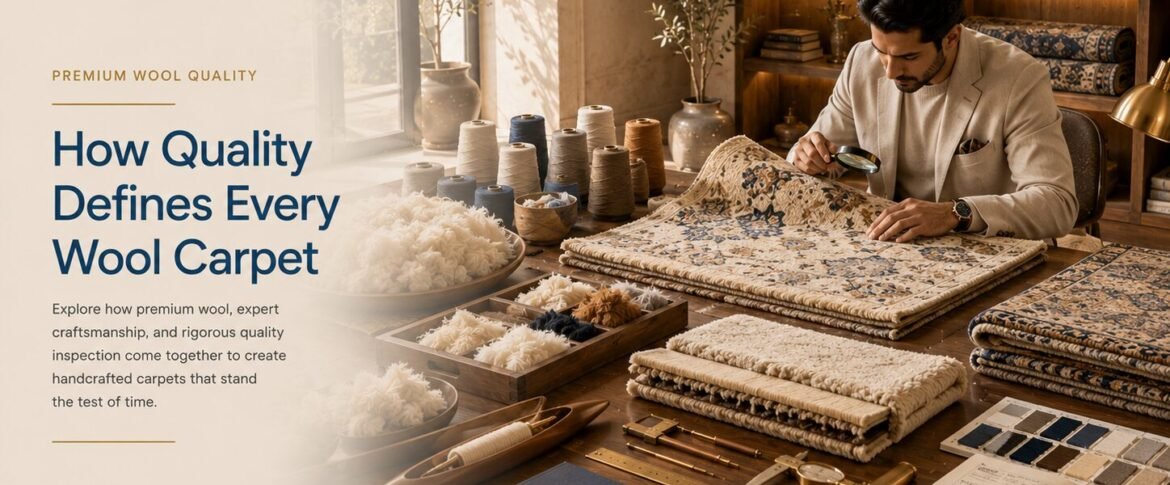
- Inspection: Every meter of carpet undergoes final visual and tactile inspection for defects, pattern alignment, color consistency, and overall quality. This human element is irreplaceable.
From experience, the robustness of these finishing stages can make or break a carpet’s reputation. A poorly finished carpet, regardless of the quality of its wool or weave, simply won’t stand the test of time or scrutiny in a commercial environment.
Ensuring Excellence: Quality Assurance and Certifications for Wool Carpet Manufacturers
Quality assurance (QA) for wool carpet manufacturers is a multi-stage, continuous process, verified by stringent internal testing and external industry certifications that attest to a carpet’s performance, safety, and environmental sustainability. These measures build trust and validate a manufacturer’s claims of excellence.
No matter how refined the individual steps, consistent quality output in the complex world of carpet manufacturing demands a robust and pervasive quality assurance system. This is where leading wool carpet manufacturers truly differentiate themselves. It’s not just about inspections at the end; it’s about integrating quality checks at every single touchpoint, from fiber to the final roll.
Integrated Quality Control Protocols
From the moment raw wool arrives, through carding, spinning, dyeing, weaving, and finishing, critical checkpoints are established. This involves a blend of automated and manual inspections:
- Raw Material Testing: Verifying micron counts, staple strength, and purity of incoming wool against specifications.
- Yarn Testing: Checking tensile strength, twist uniformity, dye consistency, and colorfastness post-dyeing.
- In-Process Weave Checks: Monitoring loom tension, pile density, pattern registration, and backing adhesion continuously during weaving or tufting.
- Final Product Inspection: A comprehensive examination of finished carpets for visual defects, dimensional stability, pile height uniformity, and adherence to design specifications. This involves light box inspections for color matching and physical tests for durability.
A common mistake manufacturers make is treating QA as a bottleneck rather than an integrated part of the production flow. What actually works is empowering every operator to be a quality controller, identifying and addressing issues immediately.
The Significance of Industry Certifications
For B2B buyers, certifications aren’t just badges; they provide an independent, authoritative validation of a manufacturer’s claims. They offer peace of mind, knowing that products meet recognized international standards. Leading wool carpet manufacturers often pursue several key certifications:
- The Woolmark Blend Mark: Administered by Australian Wool Innovation (AWI), this certification signifies that a product meets strict quality standards and contains a minimum percentage of new wool (usually 80-100%). It’s a globally recognized symbol of quality wool.
- CRI Green Label Plus: Issued by the Carpet and Rug Institute (CRI), this certification focuses on indoor air quality, ensuring low VOC (Volatile Organic Compound) emissions. For commercial projects, this is vital for health and safety compliance.
- ISO 9001: This international standard for quality management systems indicates that a manufacturer has robust processes in place to consistently meet customer and regulatory requirements.
- ISO 14001: An environmental management system standard, demonstrating a manufacturer’s commitment to reducing their environmental footprint. This is increasingly important for sustainable sourcing and responsible manufacturing practices.
- Flammability Ratings: Absolutely crucial for public spaces, carpets are tested against various national and international fire safety standards (e.g., ASTM E648, BS 4790).
These certifications are not just badges; they represent a deep investment in process integrity, product performance, and responsible manufacturing. For a business buyer, seeing these certifications from best wool carpet manufacturers means less risk and greater assurance of receiving a product that performs exactly as expected.
Conclusion
The consistent delivery of high-quality wool carpets by leading manufacturers is a testament to an intricate, multi-stage process where meticulous attention to detail at every step is non-negotiable. From the initial expert selection and rigorous grading of raw wool fibers to the precision-controlled dyeing, spinning, and advanced weaving techniques, each stage carefully builds upon the last to forge a product of exceptional durability and aesthetic appeal. Robust quality assurance protocols, often validated by esteemed industry certifications like Woolmark and CRI Green Label Plus, provide independent verification of a carpet’s performance, safety, and environmental integrity. This comprehensive approach ensures that B2B clients receive flooring solutions that not only meet but exceed demanding commercial standards.
Partnering with wool carpet manufacturers who demonstrate such unwavering commitment to quality ensures a long-lasting, sustainable, and visually stunning investment for your next commercial project. We invite you to explore the extensive collections from certified manufacturers and experience the pinnacle of wool carpet craftsmanship.
Frequently Asked Questions
How do wool carpet manufacturers ensure color consistency across dye lots?
Wool carpet manufacturers achieve color consistency through precise laboratory color matching, strict dye bath controls, and advanced spectrophotometer technology. They also implement rigorous quality checks at various stages, from raw fiber to finished yarn, ensuring minimal variation between production batches and optimal colorfastness for the end product.
What makes some wool rug manufacturers superior in terms of durability?
Superior wool rug manufacturers prioritize durability through higher quality raw wool (longer staple, appropriate micron count), denser weaving techniques like Axminster or Wilton, and robust yarn spinning methods. They also employ strong backing systems and comprehensive finishing processes, all contributing to a rug that resists wear, crushing, and shedding over time, even in high-traffic areas.
Are wool broadloom carpet manufacturers focusing on sustainable practices?
Yes, many wool broadloom carpet manufacturers are increasingly prioritizing sustainable practices. This includes sourcing renewable, biodegradable wool, minimizing water and energy consumption in production, and utilizing eco-friendly dyes and backings. Certifications like ISO 14001 demonstrate a commitment to reducing environmental impact and promoting a circular economy within the textile industry.
What distinguishes high end wool carpet brands in terms of material quality?
High end wool carpet brands differentiate themselves by using the finest grades of wool, often New Zealand or British wool, known for its superior strength, brightness, and cleanliness. They may also utilize worsted yarns for enhanced definition and durability. This commitment to premium raw material translates directly into a more luxurious feel, exceptional resilience, and extended product lifespan, justifying the investment.
How can businesses verify the authenticity and quality claims of a wool carpet supplier?
Businesses can verify claims by checking for industry certifications such as Woolmark, CRI Green Label Plus, or ISO standards, which signify adherence to recognized quality and environmental benchmarks. Requesting product specifications, independent test reports, and factory audits provides further assurance. Visiting the manufacturer’s facility or seeking references from other B2B clients can also offer invaluable insight into their operational integrity and commitment to quality.

Looking for the Perfect Rug?
Get a free consultation with our rug experts. We help you choose, style, and maintain the perfect rug for your space — at no cost.
