

 USD
USD
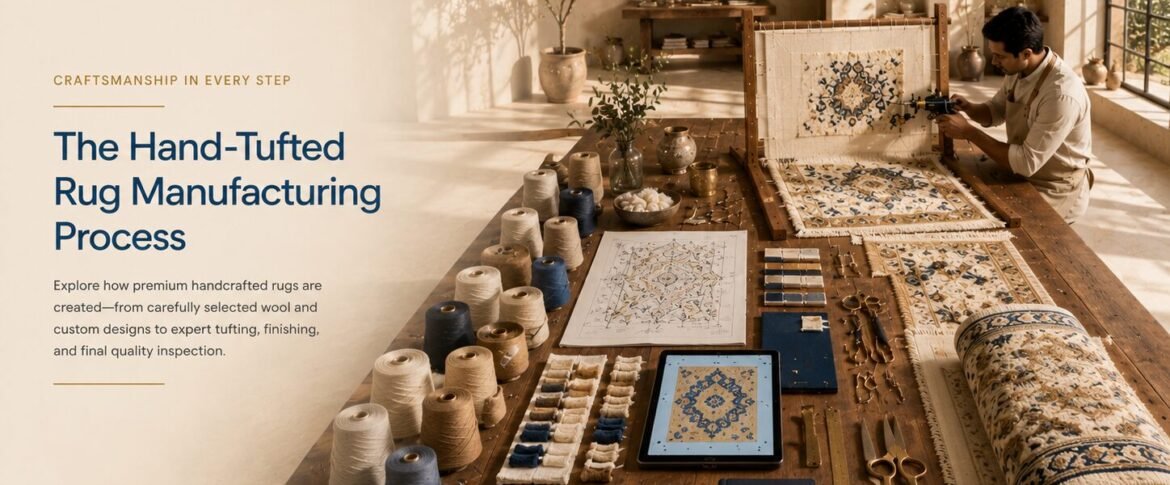
Hand Tufted Rug Manufacturers: The Craft Behind Each Piece
As someone deeply immersed in the world of B2B textile production, particularly in floor coverings, I’ve seen firsthand the intricate blend of art and engineering that goes into crafting a high-quality rug. Among the various production methods, understanding how hand tufted rug manufacturers create their products offers crucial insight for any wholesale buyer or interior designers. These aren’t just decorative items; they are the result of a precise, multi-stage process that combines modern machinery with skilled manual artistry, delivering both custom aesthetics and lasting durability.
What is Hand Tufting? Unpacking the Process
Hand tufting is a rug-making technique that involves using a special tufting gun to punch yarn through a fabric backing, forming a pile. This method marries the efficiency of machine assistance with the meticulous control of a human hand, allowing for intricate designs and customized dimensions.
Unlike traditional hand-knotted rugs, which are entirely woven by hand knot by knot, or machine-made rugs produced on large looms, hand tufting offers a unique middle ground. It provides significant design flexibility and customization options while being more time and cost-efficient than purely hand-knotted methods. This makes it an incredibly attractive option for hand tufted rug manufacturers catering to B2B clients who require volume without sacrificing bespoke appeal.
The Core Concept: Speed Meets Craftsmanship
From my experience in the industry, the true genius of hand tufting lies in its hybrid nature. An artisan works from behind a stretched canvas, following a drawn design, pushing yarn through the primary backing with an electric or pneumatic tufting gun. This gun rapidly inserts the yarn, creating either loops or cut piles on the front side. This mechanical help significantly speeds up production compared to traditional handloom methods, all while retaining that unique touch and precision only a skilled human hand can offer.
Essential Tools and Materials Used by Manufacturers
Successful rug production by hand tufted carpet manufacturers hinges on the quality of their materials and the precision of their tools. Every component plays a crucial role in the final product’s durability, appearance, and texture.
The right selection of yarn, a robust backing, and well-maintained equipment are non-negotiable for producing rugs that meet commercial standards. From my perspective, ensuring consistent quality in these foundational elements is where many a successful manufacturing run begins.
- Tufting Gun: This is the primary tool, typically electric or pneumatic, which rapidly punches yarn into the backing. Different nozzles and settings allow artisans to create varying pile heights and textures.
- Primary Backing Fabric: A sturdy, woven fabric like cotton, polyester, or polypropylene canvas forms the foundation. It needs to be durable enough to withstand the tufting process and hold the yarn securely.
- Yarn: The choice of yarn is paramount.
- Wool: Favored for its natural resilience, softness, and excellent dye uptake. New Zealand wool is a popular choice for its purity and strength.
- Viscose: Offers a silken sheen and luxurious feel, often used for adding highlights or specific textures.
- Acrylic: A synthetic option known for its vibrant colors, resistance to fading, and affordability.
- Nylon: Extremely durable and stain-resistant, ideal for high-traffic commercial areas.
- Latex Adhesive: A crucial component, typically a synthetic latex, applied to the back of the tufted rug to lock the yarn in place, preventing shedding and increasing structural integrity.
- Secondary Backing: A final layer, often felt, jute, or a heavy cotton canvas, glued over the latexed primary backing. This provides additional stability, comfort underfoot, and protection to the floor.
- Shearing and Carving Tools: Specialized shears and electric carving tools are used for leveling the pile height and creating intricate sculpted details.
The Step-by-Step Hand Tufting Process Explained
The journey from a mere concept to a tangible rug involves several meticulous stages, each demanding precision and skill from the carpet rug maker. This systematic approach ensures that every bespoke design is brought to life accurately and durably.
Having overseen countless rug productions, I can attest that consistency and attention to detail at each step are what truly differentiate a premium hand tufted rug. It’s an intricate dance between the artist’s eye and the tufting gun’s rhythm.
- Design Creation and Transfer:The process begins with a design, often created digitally, which is then projected or traced onto the primary backing fabric. This outline serves as the artisan’s guide for color changes and pattern execution. Precision here is key, as even a small error can ripple through the entire production process.
- Yarn Selection and Loading:Based on the design specification, the correct colors and types of yarn are selected. These yarns are then loaded onto frames or spindles, ready for the tufting gun. Efficient yarn management is vital for continuous workflow.
- The Tufting Process:With the primary backing stretched taut on a frame, an artisan uses the tufting gun to punch yarn through the fabric, following the design outline. This is where the magic truly happens, as the rug’s texture, density, and intricate pattern slowly emerge. The artisan controls the speed, direction, and depth of the gun, requiring significant hand-eye coordination and an understanding of how different yarns behave.
- Latex Application (Pre-Finishing):Once the tufting is complete, a generous layer of liquid latex adhesive is applied evenly to the back of the primary backing. This sticky substance cures over time, forming a strong bond that permanently locks those tufted yarn loops right into place. This is a critical step for the rug’s longevity and prevents fibers from pulling out.
- Secondary Backing Application:After the latex has dried sufficiently, a durable secondary backing material (e.g., canvas, felt) is carefully pressed onto the latexed surface. This further strengthens the rug, adds stability, protects the primary backing, and provides a clean finish to the underside.
- Shearing and Carving:The rug is then turned over to the pile side for finishing. Shearing involves carefully trimming the pile height to a uniform level, enhancing its softness and appearance. For rugs with intricate designs, carving tools are expertly wielded to create sculpted effects, truly accentuating different elements and adding a beautiful three-dimensional quality.
- Final Finishing and Inspection:Edges are bound or serged to prevent fraying. The rug undergoes a thorough cleaning, often involving vacuuming and light brushing, to remove loose fibers and debris. A final quality inspection ensures color accuracy, pile consistency, and overall craftsmanship.
Rigorous Quality Checks at Every Stage of Production
For discerning B2B clients, quality assurance is paramount. Hand tufted rug manufacturers implement stringent checks at every stage, understanding that even minor inconsistencies can impact a large order’s perceived value and durability.
In practice, our quality control isn’t just a final inspection; it’s an ongoing process woven into the fabric of production. This systematic approach guarantees that the product delivered meets or exceeds client expectations for design, durability, and finish.
- Design Accuracy: Before tufting begins, the transferred design is meticulously checked against the client’s specifications for scale, color placement, and pattern fidelity.
- Yarn Quality & Consistency: Incoming yarn batches are tested for colorfastness, strength, and consistency in dye lots to prevent variations within a single rug or across an order.
- Tufting Density & Uniformity: Artisans are constantly monitored for consistent tufting density, ensuring the pile is even throughout the rug. Areas of uneven density can unfortunately lead to premature wear or an inconsistent texture.
- Latex Application & Curing: The application of latex is checked for complete coverage and evenness. Proper curing time is essential to ensure maximum adhesion and flexibility, which directly impacts the rug’s structural integrity.
- Secondary Backing Adhesion: After application, the secondary backing is inspected for complete and secure adhesion, with no bubbles or loose edges.
- Shearing & Carving Precision: The finishing team verifies that shearing results in a uniform pile height and that any carving work aligns perfectly with the design, showing crisp lines and defined textures.
- Final Inspection & Cleanliness: Every finished rug undergoes a comprehensive visual inspection for any flaws, loose threads, or dirt. This final check ensures the rug is impeccable before packaging and shipment.
Why B2B Buyers Prefer Hand Tufted Rugs
For businesses seeking high-quality, customizable, and relatively efficient floor covering solutions, hand tufted rugs present a compelling choice. Their unique production method offers a sweet spot between traditional craftsmanship and modern efficiency.
From a B2B sourcing perspective, the appeal of hand tufted rugs is multifaceted, offering distinct advantages over other rug types for commercial and hospitality projects. Unlike flat weave carpet manufacturers who focus on a specific texture, hand tufted options provide a broader aesthetic range.
Here’s why many B2B clients choose hand tufted options:
- Unmatched Design Flexibility: Hand tufting allows for virtually any shape, size, color, and intricate pattern. This is crucial for interior designers and hospitality specifiers who require bespoke solutions to match specific branding or aesthetic visions.
- Faster Lead Times: Compared to hand-knotted rugs, which can take months or even years to produce, hand tufted rugs have significantly shorter lead times. This efficiency is critical for projects with tight deadlines.
- Cost-Effectiveness for Customization: While more labor-intensive than machine-made rugs, hand tufted rugs offer a more economical route to custom designs than hand-knotted alternatives, especially for larger orders.
- Durability and Luxurious Feel: When produced with high-quality materials and proper latexing, hand tufted rugs are robust and durable, suitable for various commercial environments. They also often boast a rich, dense pile that feels luxurious underfoot.
- Versatility in Application: From corporate offices and boutique hotels to high-end retail spaces, hand tufted rugs can be tailored to meet diverse functional and aesthetic requirements, offering excellent sound absorption and comfort.
- Artisan Touch: Despite machine assistance, each hand tufted rug carries the unique touch of the artisan who guided the tufting gun, imparting that unmistakable sense of bespoke craftsmanship that machine-made alternatives simply cannot replicate. This inherent artisanal quality is a key differentiator that truly adds value.
Conclusion
The process behind how hand tufted rug manufacturers bring their creations to life is a testament to the powerful synergy of human skill and technological assistance. It is a meticulous journey from initial design concept to a beautifully finished product, marked by careful material selection, precise execution, and rigorous quality control at every stage. For B2B clients, choosing hand tufted rugs means investing in highly customizable, durable, and aesthetically versatile floor coverings that offer significant value through their blend of craftsmanship and efficiency. This method stands out by delivering bespoke quality with manageable lead times, making it an ideal choice for diverse commercial and design projects.
If you’re considering hand tufted rugs for your next project, reaching out to experienced manufacturers is the best first step. Their expertise can help you navigate design possibilities, material selections, and production timelines to ensure your vision becomes a stunning reality.
Frequently Asked Questions
What is the main difference between hand tufted rug manufacturers and hand-knotted rug makers?
Hand tufted rug manufacturers use a tufting gun to punch yarn through a primary backing, which is then secured with latex. Hand-knotted rug makers, by contrast, manually tie individual knots onto a warp and weft foundation. This makes hand tufted rugs generally faster and more economical to produce than hand-knotted rugs, while still offering excellent customization.
What materials do hand tufted carpet manufacturers typically use for wholesale orders?
For wholesale orders, hand tufted carpet manufacturers commonly use a range of materials. Wool is a popular choice for its durability and luxurious feel. Viscose offers a silky sheen, while synthetic options like acrylic and nylon provide excellent stain resistance, vibrant colors, and cost-effectiveness, especially for high-traffic commercial environments.
How do handloom rugs manufacturers compare to hand tufted processes?
Handloom rugs are woven on a loom, where warp and weft threads interlace, often creating flat weave or dhurrie styles. This differs significantly from hand tufted production, which involves punching yarn into a backing to create a pile. Hand tufted rugs typically offer more varied textures and pile heights than most handloom varieties, providing different aesthetic and tactile qualities.
What are the key quality control measures for a carpet rug maker?
Key quality control measures for a carpet rug maker include rigorous checks at every stage. This involves verifying design accuracy, inspecting yarn quality and consistency, monitoring tufting density, ensuring proper latex application and curing, confirming secure secondary backing adhesion, and precise shearing and carving. A final comprehensive visual inspection ensures the finished rug meets all specifications.
Can hand tufted rug manufacturers produce custom sizes and designs for bulk B2B orders?
Absolutely. One of the primary advantages of working with hand tufted rug manufacturers is their ability to produce highly customized pieces, even for bulk B2B orders. They can accommodate virtually any size, shape, color combination, and intricate design pattern, making them an ideal choice for bespoke commercial projects and unique interior design schemes.

Looking for the Perfect Rug?
Get a free consultation with our rug experts. We help you choose, style, and maintain the perfect rug for your space — at no cost.
